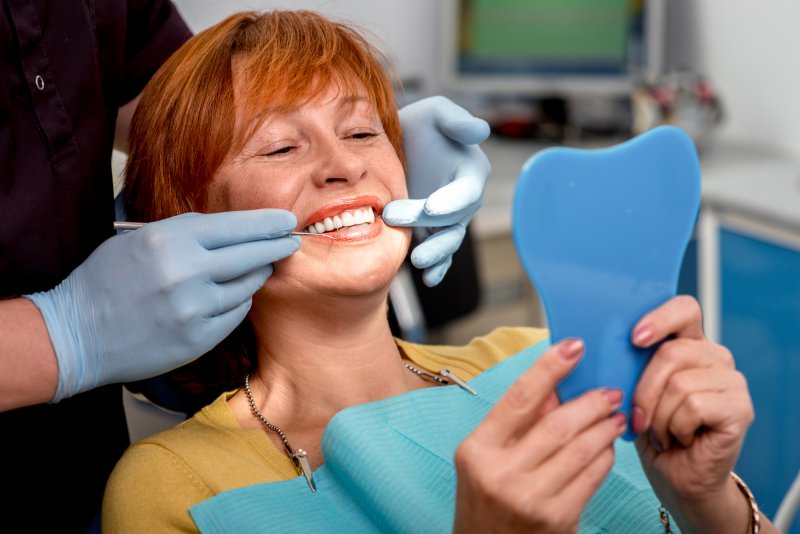
A practical, evidence‑based guide to the denture adaptation period – improving speech, learning to eat again, managing sore spots and gagging, and knowing what’s normal vs. when to call your dentist.
Table of Contents
Key Takeaways (TL;DR)
- Adaptation takes 4‑8 weeks: The first week is the hardest. Speech improves in 1‑2 weeks; eating becomes comfortable in 4‑8 weeks. Be patient with yourself.
- Practice speech aloud: Reading aloud, repeating tricky words (e.g., “fifty‑five,” “sister”), and singing help your tongue learn new positions. Most lisping resolves within 2 weeks.
- Start with soft foods: Yogurt, scrambled eggs, mashed potatoes, smoothies. Cut food into small pieces. Chew on both sides simultaneously. Avoid sticky, hard, or tough foods for the first month.
- Sore spots are normal – but don’t ignore them: Minor tenderness is expected. If a sore spot persists for more than 2‑3 days after a dental adjustment, call your dentist. Do not try to sand the denture yourself.
- Wear dentures as prescribed: New denture wearers should wear them during waking hours (removing at night) to accelerate adaptation. Removing them for hours at a time prolongs the adjustment period.
The Denture Adaptation Timeline: What to Expect Week by Week
Every patient adapts differently, but most follow a predictable pattern. Understanding this timeline reduces anxiety and sets realistic expectations.
Patients who have worn immediate dentures (placed right after extractions) often experience a longer adaptation period because the gums are healing simultaneously. For these patients, the first reline at 3‑6 months is critical for restoring fit.
Improving Speech with New Dentures: Exercises and Techniques
New dentures change the shape of the palate and the position of the front teeth, affecting the production of certain sounds – especially “s,” “sh,” “ch,” “f,” and “v.” Most patients notice a lisp or whistling sound initially. With practice, the tongue learns to compensate.
🗣️ Speech exercises to accelerate adaptation:
- Read aloud daily: Read from a book or newspaper for 10‑15 minutes, focusing on enunciating clearly. Record yourself and listen for improvement.
- Repeat tricky phrases: “Fifty‑five,” “sister Susie sews socks,” “Peter picked pickled peppers,” “the weather is wonderful.” These target problematic consonants.
- Count from 60 to 70: The “sixty” and “seventy” sounds challenge the tongue‑to‑palate seal.
- Sing along to music: Singing forces exaggerated mouth movements, which helps retrain the tongue.
- Speak slowly at first: Rushing makes pronunciation harder. Slow, deliberate speech improves faster.
If a lisp persists beyond 3‑4 weeks despite regular practice, the denture may have an excessively thick palate or over‑contoured anterior teeth. Your dentist can often adjust the denture to improve speech. Do not assume you “just have to live with it.”
Learning to Eat with Dentures: A Gradual Progression
Eating with dentures requires retraining your chewing muscles and learning to sense food placement without the feedback of natural teeth. Follow this progression to build confidence and avoid frustration.
🍽️ Food progression guide:
Week 1 (liquid to pureed): Smoothies, yogurt, pudding, applesauce, soup (broth‑based), protein shakes, mashed potatoes, refried beans.
Week 2‑3 (soft, bite‑sized): Scrambled eggs, cottage cheese, oatmeal, soft cooked pasta, steamed fish, ripe bananas, avocado, well‑cooked carrots.
Week 4‑6 (semi‑soft): Ground meat (meatloaf, hamburger patty), soft bread (no crust), pancakes, soft cheese, cooked vegetables (broccoli, cauliflower), rice.
Week 6‑8 (near normal): Chicken (cut small), softer fruits (peaches, melon), salad (finely chopped), crackers (soaked briefly).
After 2 months (with caution): Steak (cut very small), raw carrots (shredded), nuts (ground), corn on the cob (cut off the cob).
Eating techniques:
- Cut food into small, bite‑sized pieces (about the size of a pea initially).
- Chew slowly on both sides of the mouth simultaneously – this stabilizes the denture.
- Avoid biting with front teeth (they are designed for aesthetics, not heavy biting).
- Take smaller bites than you did with natural teeth.
- Drink water with meals to help with swallowing and denture stability.
Managing Sore Spots and Pressure Points
Sore spots are the most common complaint during denture adaptation. They occur where the denture base exerts excessive pressure on the gums. While some tenderness is normal, painful ulcers are not.
✅ What to do:
- Remove dentures for 4‑6 hours: Give the sore area time to heal. Salt water rinses (1 tsp salt per 8 oz warm water) soothe inflammation.
- Schedule an adjustment appointment: Your dentist will identify the pressure point and relieve it by polishing the denture base. This takes 5‑10 minutes.
- Use a topical anesthetic (e.g., Orajel, Benzodent): Short‑term relief while waiting for an adjustment.
- Alternate wearing periods: Wear dentures for 4‑6 hours, remove for 2 hours, then reinsert. This reduces cumulative pressure.
❌ What NOT to do:
- Do not use a nail file or sandpaper on your denture: You will destroy the fit and void the warranty.
- Do not “tough it out” for weeks: Persistent pressure causes ulceration and can lead to infection.
- Do not apply adhesive over a sore spot: This masks the problem and may worsen tissue irritation.
Most new denture wearers need 1‑3 adjustment appointments in the first month. This is normal and expected. A dentist who tells you “no adjustments should be needed” is unrealistic – the human mouth is not a perfect replica of a stone model.
Managing the Gag Reflex with Upper Dentures
Some patients experience a gagging sensation with a new upper denture, especially if the posterior border extends too far back toward the soft palate. This is usually temporary and can be addressed.
Techniques to reduce gagging:
- Salt water gargling: Gargling with warm salt water before inserting the denture desensitizes the gag reflex.
- Distraction: Suck on a hard candy (sugar‑free) or breathe through your mouth while inserting the denture.
- Gradual exposure: Wear the denture for short periods, gradually increasing duration. The brain learns to ignore the sensation.
- Denture adjustment: If gagging persists beyond 2 weeks, the dentist can shorten the posterior border of the upper denture. This is a simple, effective fix.
Severe, persistent gagging that does not respond to adjustment may indicate that the patient would benefit from an implant‑supported upper denture (which eliminates the palate‑covering acrylic) or a horseshoe‑shaped denture design. Discuss these options with your dentist if standard adjustments fail.
Using Denture Adhesives: When and How
Denture adhesives (creams, powders, pads) can improve confidence during the adaptation period, but they should not be used as a substitute for a well‑fitting denture.
Best practices for adhesive use:
- Use sparingly: Apply 3‑4 small dots or a thin strip – not a thick layer. Excess adhesive oozes out and is difficult to clean.
- Apply to dry denture: Dry the denture with a tissue before applying adhesive.
- Wait before eating/drinking: Allow 5‑10 minutes after insertion before eating or drinking hot liquids.
- Remove adhesive daily: Brush denture thoroughly; use a denture adhesive remover wipe if residue remains.
- Zinc‑free products: Use zinc‑free adhesives (most major brands offer them). Zinc toxicity from overuse is rare but preventable.
Red flags: If you are using more than one tube per week, or if you need adhesive to keep your denture from falling out, see your dentist for a reline. Adhesive is a temporary aid, not a long‑term solution for poor fit.
Normal Discomfort vs. Warning Signs: When to Call Your Dentist
Knowing what is normal and what requires professional attention prevents unnecessary suffering and avoids complications.
Do not hesitate to call your dentist. Most adjustments are quick (10‑15 minutes) and provide immediate relief. It is far better to have a minor adjustment than to develop a chronic ulcer or stop wearing your dentures entirely.
Frequently Asked Questions About Denture Adjustment
How long does it take to get used to new dentures?
Most patients feel comfortable with basic functions (speaking, eating soft foods) within 2‑4 weeks. Full adaptation, including eating a normal diet and forgetting you are wearing dentures, typically takes 6‑8 weeks. Patients who have worn immediate dentures may need 3‑4 months due to ongoing gum healing.
Should I wear my new dentures all day at first?
Yes, as much as tolerated. Wearing dentures during waking hours accelerates adaptation. Remove them at night to allow gum tissue recovery. If soreness is severe, remove them for a few hours, then reinsert. Avoid leaving them out for entire days – this prolongs the adjustment period.
Why do my new dentures feel too big?
New dentures are intentionally slightly thicker and broader than your final denture will be after relines. The extra bulk provides strength during the initial healing phase. As your gums settle and you receive a reline (usually at 3‑6 months), the denture will feel less bulky. If the bulkiness is intolerable, ask your dentist about reducing the flange thickness.
Can I use over‑the‑counter numbing gels for sore spots?
Yes, short‑term (e.g., Orajel, Anbesol, Benzodent). However, these mask the pain rather than fix the cause. Use them only until you can see your dentist for an adjustment. Prolonged use can cause chemical burns or mask a serious problem.
Why do I produce so much saliva with new dentures?
Increased saliva is a normal reflex during the first few days. Your mouth perceives the denture as a foreign object and tries to “wash it away.” Saliva production typically returns to normal within 1‑2 weeks. Sucking on a sugar‑free hard candy or drinking water can help.
What should I do if my denture breaks during the adaptation period?
Do not attempt to repair it yourself. Call your dentist immediately – most offer emergency repair services. If the break occurs after hours, remove the denture and store it in water (to prevent warping). Do not wear a broken denture; sharp edges can cut your gums.
People Also Search For
- How to stop gagging with upper dentures
- Foods to avoid with new dentures
- Denture adjustment near Gainesville GA
- Why do my dentures click when I talk
- Can dentures cause permanent speech problems
- Denture sore spots home remedy
- How to chew with dentures without pain
- First week with dentures survival guide
Sources & References
- American Dental Association – Patient Guide to Denture Adaptation (2024)
- Journal of Prosthodontics – Time Course of Adaptation to Complete Dentures (2023)
- Journal of Oral Rehabilitation – Speech Adaptation with New Dentures: A Longitudinal Study (2022)
- International Journal of Prosthodontics – Management of Gag Reflex in Denture Patients (2024)
- ADA Clinical Practice Guidelines – Post‑Delivery Denture Adjustments (2023)
Last reviewed: April 2026
About the Author / Clinical Oversight
This guide was developed with input from prosthodontists and denture patients to provide practical, evidence‑based advice for the adaptation period. For patients in Gainesville, Oakwood, Flowery Branch, and across Hall County, understanding what to expect with new dentures reduces anxiety and improves outcomes. For more detailed information, see our complete denture guide, denture care and maintenance, and denture reline and repair guide. Return to the main Gainesville dental care resource for more information.