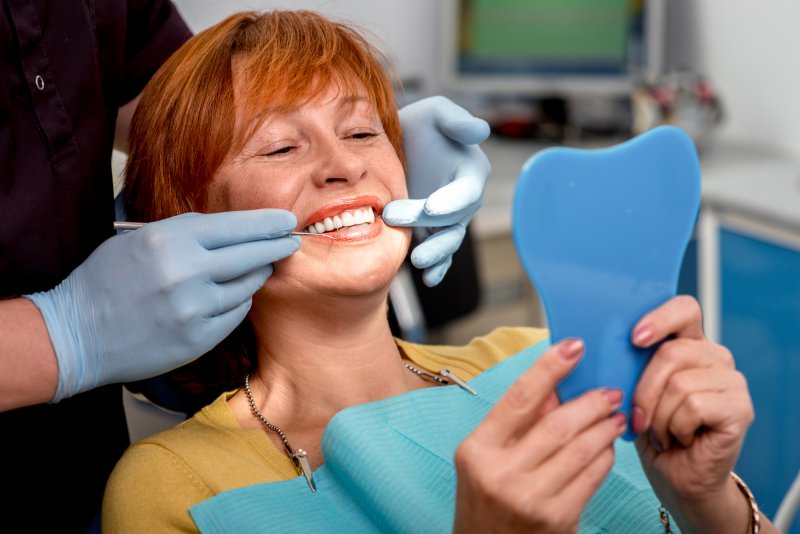
A comprehensive guide to tooth-colored fillings and inlays/onlays in Gainesville, exploring modern materials, procedures, and how Hall County dentists preserve natural tooth structure.
Table of Contents
Key Takeaways (TL;DR)
- Modern Materials: Tooth-colored fillings use composite resin that bonds directly to tooth structure, while inlays/onlays are custom-made indirect restorations for larger cavities.
- Conservative Approach: Both options preserve more healthy tooth structure than traditional methods, supporting long-term dental health for Hall County patients.
- Local Anesthesia & Comfort: Gainesville dentists use conservative preparation techniques and local anesthesia to ensure patient comfort throughout the procedure.
- Durability Expectations: Composite fillings typically last 5-10 years, while ceramic inlays/onlays can last 10-15+ years with proper maintenance.
- Local Partnerships: Gainesville-area dental laboratories and the availability of digital impression technology enable precise, high-quality restorations with efficient turnaround times.
Introduction: Beyond Silver Fillings in Hall County
The landscape of dental restoration in Gainesville has evolved significantly from the era of silver amalgam fillings. Today, Hall County residents have access to advanced tooth-colored options that not only repair cavities but do so while preserving natural tooth structure and aesthetics. This shift reflects broader trends in conservative dentistry, where the focus extends beyond simply “filling holes” to maintaining the long-term health and integrity of each tooth.
Modern composite fillings and inlays/onlays represent a fundamental advancement in how local dentists approach tooth decay and damage. According to the American Dental Association’s Council on Scientific Affairs, contemporary dental materials now offer durability comparable to traditional options while providing superior aesthetic outcomes and more conservative preparation requirements. For Gainesville patients, this means treatments that look natural while minimizing the removal of healthy tooth enamel—a principle central to modern restorative dentistry.
The transition toward these advanced materials in Hall County practices aligns with patient preferences for natural-looking results and dentists’ commitment to minimally invasive techniques. As of January 2026, most Gainesville dental offices have adopted tooth-colored restorations as their standard for cavity treatment, reflecting both technological advancements and changing patient expectations regarding dental care outcomes.
What Are Tooth-Colored Fillings and How Do They Work?
Tooth-colored fillings, clinically known as composite resin restorations, represent the current standard for treating small to medium cavities in both front and back teeth. These materials consist of a resin matrix combined with glass or ceramic filler particles that provide strength and wear resistance. Unlike silver amalgam fillings that rely on mechanical retention through undercuts in the tooth, composite fillings bond directly to tooth structure through sophisticated adhesive systems.
Key Components of Modern Composite Fillings:
- Resin Matrix: Bisphenol A-glycidyl methacrylate (Bis-GMA) or similar compounds that form the plastic base
- Filler Particles: Glass, quartz, or ceramic particles that provide strength and reduce shrinkage
- Coupling Agent: Silane compounds that bond filler particles to the resin matrix
- Initiator-Accelerator System: Chemicals that trigger and control the hardening process when exposed to curing light
The bonding technology represents a significant advancement in adhesive dentistry. Gainesville dentists use etch-and-rinse or self-etch adhesive systems that create micro-mechanical retention by penetrating the microscopic pores in tooth enamel and dentin. This creates a hybrid layer—a fusion of resin and tooth structure—that provides exceptional bond strength, often exceeding 20 megapascals according to materials testing data.
Aesthetic properties are achieved through sophisticated shade-matching systems and layering techniques. Most Gainesville dental practices use digital shade guides that analyze tooth color across multiple parameters, allowing for precise color matching. Dentists then apply composite resin in layers, using different opacities and tints to mimic the natural translucency and internal characterization of tooth structure. This attention to detail is particularly important for visible anterior restorations, where seamless integration with natural teeth is paramount.
Clinical applications extend across the dental arch. While early composites were primarily used for front teeth due to aesthetic considerations, modern formulations—particularly nanohybrid and nanofilled composites—provide sufficient strength and wear resistance for posterior restorations. Gainesville dentists typically reserve composite fillings for small to medium-sized cavities, particularly those involving one or two surfaces of a tooth. For larger restorations, they may recommend inlays, onlays, or crowns to ensure adequate strength and longevity.
Inlays and Onlays: When Fillings Aren’t Enough, But Crowns Are Too Much
Inlays and onlays occupy a crucial middle ground in the restorative dentistry continuum, offering solutions for cavities and damage too extensive for direct fillings but not severe enough to require full coverage crowns. These indirect restorations are custom-made in a dental laboratory or with chairside CAD/CAM systems, then bonded to the prepared tooth. The distinction between the two lies in their coverage: inlays fit within the cusps (the raised points) of a tooth, while onlays extend over one or more cusps to replace missing tooth structure.
Indications for inlays and onlays in Gainesville practices typically include large cavities where a direct filling would compromise structural integrity, replacement of failing large amalgam restorations, treatment of cracked tooth syndrome (without vertical fracture), and restoration of teeth with moderate to severe wear from bruxism or acid erosion. The conservative advantage is substantial: compared to crowns, which require reduction of the entire tooth circumference, inlays and onlays preserve significantly more healthy tooth structure—often 15-30% more according to conservative dentistry principles.
Material options available through Gainesville-area dental laboratories include ceramic (porcelain), composite resin, and gold. Ceramic inlays/onlays, particularly those made from lithium disilicate or zirconia-reinforced materials, offer excellent aesthetics and strength comparable to natural tooth enamel. Composite resin indirect restorations provide good aesthetics at a lower cost, though they may be slightly less wear-resistant. Gold, while the most durable and biologically compatible option, is less frequently chosen due to aesthetic considerations.
Local laboratory partnerships are essential for high-quality indirect restorations. Hall County benefits from several reputable dental laboratories that work closely with area dentists to fabricate precise, well-fitting inlays and onlays. Turnaround times typically range from 1-2 weeks, though some Gainesville practices offering CEREC same-day crowns technology can also produce ceramic inlays/onlays in a single visit using chairside milling systems.
Direct Comparison: Composite Fillings vs. Inlays/Onlays
Understanding when a direct composite filling is appropriate versus when an indirect inlay or onlay is needed helps Gainesville patients make informed decisions about their dental care. The choice depends on multiple factors including cavity size, tooth location, aesthetic requirements, occlusal forces, and long-term prognosis.
Clinical observations from Gainesville dental practices indicate that the decision threshold typically occurs when a cavity involves approximately one-third to one-half of the tooth’s occlusal (biting) surface. Beyond this point, the polymerization shrinkage of composite resin—which occurs as the material hardens—can create stresses that may lead to marginal leakage, postoperative sensitivity, or fracture. Inlays and onlays, being fabricated outside the mouth and then bonded, avoid this issue entirely, making them more suitable for larger restorations.
The Placement Process in Gainesville Practices
The procedure for placing tooth-colored restorations in Gainesville dental offices follows standardized protocols that prioritize patient comfort, precision, and long-term success. Whether receiving a composite filling or an inlay/onlay, patients can expect a carefully managed experience that addresses both clinical and comfort needs.
Composite Filling Process
Step-by-Step Composite Placement:
- Local Anesthesia & Isolation: The area is numbed with local anesthetic for comfort. A rubber dam or isolation system is placed to keep the tooth dry and free from contamination.
- Conservative Cavity Preparation: Only decayed tooth structure is removed using high-speed and slow-speed dental drills. Modern techniques preserve maximum healthy enamel and dentin.
- Etching & Bonding Application: The prepared tooth surface is etched with phosphoric acid gel to create microscopic pores, then rinsed. Dental adhesive is applied and light-cured to create the bonding layer.
- Layered Resin Placement: Composite resin is placed in thin increments (typically 2mm or less), with each layer light-cured for 20-40 seconds. This layering minimizes polymerization shrinkage stress.
- Contouring & Polishing: After the final layer, the restoration is shaped to match natural tooth anatomy. A series of progressively finer polishing instruments create a smooth, plaque-resistant surface.
For composite fillings in Hall County, the entire procedure typically takes 30-60 minutes depending on the cavity’s size and complexity. Most patients experience minimal discomfort during and after the procedure, with any sensitivity usually resolving within a few days as the tooth adapts to the restoration.
Inlay/Onlay Process
The process for indirect restorations involves two appointments spaced 1-2 weeks apart, allowing time for laboratory fabrication.
First Visit: Preparation & Impression
- Tooth Preparation: After anesthesia, the tooth is prepared with even, well-defined margins. More tooth structure may be removed than for a filling, but significantly less than for a crown.
- Digital or Traditional Impression: Most Gainesville practices now use digital intraoral scanners to create a precise 3D model. Traditional polyvinyl siloxane impressions are still used by some providers.
- Temporary Restoration: A temporary filling or temporary inlay/onlay is placed to protect the tooth between visits.
- Shade Selection: For ceramic restorations, the dentist uses a shade guide to match the restoration to adjacent teeth.
Laboratory Phase (1-2 weeks)
The digital file or physical impression is sent to a dental laboratory. Ceramic or composite material is milled or layered to create the custom restoration.
Second Visit: Cementation
- Try-in & Adjustment: The temporary is removed, and the final restoration is tried in to check fit, contacts, and color.
- Adhesive Cementation: After any necessary adjustments, the tooth is isolated, etched, and prepared with adhesive. Dual-cure resin cement is used to bond the restoration permanently.
- Occlusal Adjustment & Polishing: The bite is checked with articulating paper, and any high spots are adjusted. The restoration is polished to a smooth finish.
Gainesville patients considering inlays or onlays should plan for approximately 60-90 minutes for the first visit and 30-45 minutes for the second visit. Some practices offering same-day CEREC technology can complete the entire process in a single longer appointment (typically 2-3 hours).
Material Science: Understanding Composite Resins and Ceramics
The evolution of dental materials has been instrumental in advancing restorative dentistry outcomes in Gainesville. Modern composites and ceramics offer physical properties that closely mimic natural tooth structure while providing the durability needed for long-term function.
Composite resin evolution has progressed through several generations. Early macrofilled composites (1970s-1980s) contained large filler particles that created rough surfaces prone to staining. Microfilled composites improved polishability but lacked sufficient strength for posterior teeth. Modern nanohybrid and nanofilled composites, which incorporate filler particles as small as 20-75 nanometers, combine the polish retention of microfills with the strength of hybrid composites. According to materials research, contemporary composites achieve flexural strengths of 100-150 megapascals—sufficient for most clinical applications.
Ceramic options for indirect restorations available through Gainesville laboratories include feldspathic porcelain (the original dental ceramic), lithium disilicate (marketed as IPS e.max), and various zirconia formulations. Lithium disilicate has become particularly popular for inlays and onlays due to its combination of strength (350-400 MPa), aesthetics, and ability to be adhesively bonded. Zirconia-reinforced ceramics offer even greater strength (800-1200 MPa) but are less translucent, making them more suitable for posterior teeth where aesthetics are less critical.
Biocompatibility considerations are important for Hall County patients with material sensitivities or allergies. Composite resins are generally well-tolerated, though rare allergic reactions to components like residual monomers have been documented. Ceramic materials are essentially inert and hypoallergenic. Gold, while rarely used for inlays/onlays today due to aesthetics, remains the most biocompatible option with virtually no allergic potential.
Shade matching technology in Gainesville practices has advanced significantly. While traditional physical shade guides are still used, many dentists now employ digital shade analysis systems that measure tooth color at multiple points, account for fluorescence and opalescence, and communicate this information digitally to laboratories. This technology helps achieve more predictable and natural-looking aesthetic outcomes, particularly for visible anterior restorations.
Longevity, Durability, and When to Consider Replacement
The longevity of tooth-colored restorations depends on multiple factors including material selection, placement technique, oral hygiene, dietary habits, and occlusal forces. Understanding expected lifespans and failure modes helps Gainesville patients maintain their restorations effectively and recognize when replacement may be necessary.
Failure modes for composite fillings typically begin with marginal breakdown. As composite resin ages, it can undergo water absorption and expansion, thermal cycling stress, and mechanical wear. Marginal gaps may develop, allowing bacteria to infiltrate and cause secondary (recurrent) decay. According to longitudinal studies cited in the Journal of Dental Research, the annual failure rate for posterior composite restorations ranges from 1-3%, meaning approximately 90% survive 5 years and 70-80% survive 10 years with proper care.
Ceramic inlays and onlays generally exhibit greater longevity due to their superior physical properties and fabrication under controlled laboratory conditions. However, they can fail through fracture (either of the restoration or the supporting tooth), debonding of the cement interface, or wear of opposing natural teeth. Clinical observations from Gainesville practices suggest that properly placed ceramic inlays/onlays have success rates exceeding 90% at 10 years when placed on teeth with adequate remaining structure.
Replacement indicators that Hall County dentists monitor during recall examinations include visible marginal breakdown, recurrent decay detected radiographically or with an explorer, persistent sensitivity or pain, fracture lines in the restoration or tooth, and significant wear that compromises function. Aesthetics may also drive replacement if the restoration becomes discolored or no longer matches adjacent teeth due to natural aging of the dentition.
Salvage vs. Replacement Decision Factors:
- Repairable: Small marginal defects, minor chips, or superficial staining that can be polished or added to with new composite
- Replace if: Extensive recurrent decay, fracture extending into tooth structure, multiple worn surfaces, or poor aesthetic integration
- Progression to Crowns: When inlays/onlays are no longer sufficient due to extensive tooth structure loss, root canal treatment history, or functional requirements
Progression to crowns becomes necessary when the remaining tooth structure can no longer support a conservative restoration. This typically occurs when cavity size exceeds 50% of the clinical crown, when multiple surfaces are involved, when the tooth has undergone root canal treatment (which can make teeth more brittle), or when previous restorations have failed repeatedly. In such cases, comprehensive dental care planning helps determine the most appropriate long-term solution.
Cost Considerations and Insurance Coverage in Georgia
Understanding the financial aspects of tooth-colored restorations helps Gainesville patients make informed decisions aligned with their budgets and dental health goals. Costs vary based on material selection, restoration size and complexity, geographic location, and individual practice fee structures.
Insurance coverage patterns in Georgia typically follow historical precedents established when amalgam was the standard material. Most dental insurance plans cover composite fillings at the same percentage as amalgam (often 80-100% after deductible) when deemed medically necessary. However, some plans may apply a downgrade clause, paying only the amalgam rate and requiring the patient to pay the difference for composite. It’s essential for Hall County patients to verify their specific benefits before treatment.
Inlays and onlays are generally classified similarly to crowns for insurance purposes, with typical coverage at 50-80% after deductible. Some plans may have waiting periods or frequency limitations (e.g., replacement only after 5-10 years). The distinction between “necessary” versus “elective” can affect coverage, particularly for replacing old but functional amalgam fillings with tooth-colored alternatives for aesthetic reasons.
The value proposition of investing in quality restorations extends beyond initial cost. While composite fillings represent the most cost-effective solution for small cavities, inlays and onlays offer better long-term value for larger restorations due to their superior durability and tooth preservation benefits. A comparative analysis reveals that although the upfront cost of an inlay may be 2-3 times that of a large composite filling, its expected lifespan of 10-15 years versus 5-10 years for the filling can make it more economical over time when considering replacement costs and potential complications.
For patients concerned about dental restoration costs, most Gainesville practices offer flexible payment options including third-party financing through companies like CareCredit, in-house payment plans, and acceptance of major credit cards. Some practices also offer membership plans for uninsured patients that provide discounts on restorative procedures.
Prevention and Maintenance for Long-Term Success
Preserving the longevity of tooth-colored restorations requires a partnership between Gainesville dental providers and their patients. Effective maintenance combines proper home care, dietary modifications, professional monitoring, and protective measures when indicated.
Essential Maintenance Practices:
- Oral Hygiene Around Restorations: Special attention should be paid to cleaning along the margins where the restoration meets natural tooth structure. Soft-bristled brushes and non-abrasive toothpaste help prevent scratching of composite surfaces. Flossing daily removes plaque from interproximal margins.
- Dietary Considerations: Limiting acidic foods and beverages (sodas, citrus, wine) helps prevent erosion of both natural teeth and restorative materials. Reducing frequency of sugary snacks minimizes acid production by oral bacteria. Avoiding extremely hard foods (ice, hard candy, nuts in shells) prevents fracture of restorations or supporting teeth.
- Regular Professional Monitoring: Biannual dental examinations allow Gainesville dentists to check restoration margins for leakage, assess wear patterns, evaluate occlusion, and detect early signs of recurrent decay. Bitewing radiographs taken every 12-24 months help identify problems beneath existing restorations.
- Nightguard Considerations: For patients with bruxism (teeth grinding) or clenching habits, custom-fabricated nightguards protect both natural teeth and restorations from excessive forces. Hall County dentists typically recommend hard acrylic or dual-laminate guards that distribute forces evenly.
- Recall Schedule: Appropriate frequency depends on individual risk assessment. High-risk patients (those with active decay, poor hygiene, dry mouth, or heavy bruxism) may need 3-4 month recalls, while low-risk patients typically maintain standard 6-month intervals.
Marginal integrity assessment during recall visits involves visual examination with magnification, tactile evaluation with dental explorers, and sometimes use of disclosing solutions that highlight areas of plaque accumulation or early demineralization. According to preventive dentistry guidelines from the American Dental Association, early detection of marginal breakdown allows for conservative repair rather than complete replacement, preserving more tooth structure.
For patients with multiple or extensive restorations, Gainesville dentists may recommend specific oral hygiene aids such as interdental brushes, water flossers, or prescription-strength fluoride toothpaste. Patients with dry mouth (xerostomia)—whether medication-induced or related to systemic conditions—may benefit from saliva substitutes or remineralizing products to help protect both natural teeth and restorative materials.
Long-term monitoring also includes periodic evaluation of occlusion (bite) as restorations wear or opposing teeth shift. Even minor changes in bite can create excessive forces on specific teeth or restorations, leading to premature failure. Adjustments to the biting surfaces, either of the restoration or opposing teeth, can redistribute forces more evenly and extend service life.
Frequently Asked Questions
Are tooth-colored fillings as strong as silver fillings?
Modern composite fillings have compressive strength comparable to amalgam (250-300 MPa versus 300-400 MPa for amalgam), though they have different physical properties. While amalgam has greater tensile strength, composites bond directly to tooth structure, which can strengthen the remaining tooth. For most small to medium cavities, properly placed composite fillings provide sufficient strength, especially with today’s advanced adhesive systems.
Can composite fillings be placed in back teeth?
Yes, modern composite materials are specifically formulated for posterior use. Nanohybrid and nanofilled composites provide excellent wear resistance and strength suitable for molars and premolars. The key is proper case selection—composites work best for small to moderate-sized cavities in back teeth. For very large cavities or patients with heavy biting forces, inlays/onlays or crowns may be recommended for added durability.
How long does the procedure take?
A single composite filling typically takes 30-60 minutes from anesthesia to final polishing. Inlay/onlay procedures require two visits: the first (preparation and impression) takes 60-90 minutes, followed by a laboratory phase of 1-2 weeks, then a second visit (cementation) of 30-45 minutes. Same-day CEREC inlays/onlays can be completed in approximately 2-3 hours in a single visit.
Will insurance cover tooth-colored fillings?
Most dental insurance plans in Georgia cover composite fillings at the same percentage as amalgam when deemed medically necessary. However, some plans apply a “downgrade” clause, paying only the amalgam rate and requiring the patient to pay the difference. It’s important to verify your specific benefits before treatment. Inlays and onlays are typically covered at the crown benefit level (usually 50-80%).
What if I’m allergic to materials?
True allergies to composite components are rare but possible. If you have a known allergy to dental materials, inform your Gainesville dentist before treatment. Ceramic inlays/onlays are generally hypoallergenic as they contain no metal or resin components. Patch testing can be performed if there’s concern about sensitivity. Gold, while rarely used today for aesthetic reasons, is the most biocompatible option with virtually no allergic potential.
How do I know if I need a filling or an inlay?
The decision depends on cavity size, location, and remaining tooth structure. As a general guideline, when a cavity involves approximately one-third to one-half of the tooth’s biting surface or extends to involve multiple surfaces, an inlay or onlay may be recommended. Your Gainesville dentist will evaluate with visual examination, X-rays, and sometimes intraoral scans to determine the most appropriate conservative restoration.
Can old silver fillings be replaced with tooth-colored ones?
Yes, amalgam fillings can typically be replaced with composite fillings or inlays/onlays. Reasons for replacement include aesthetic concerns, marginal breakdown, recurrent decay, or crack development. The process involves removing the old filling, preparing the tooth, and placing the new restoration. However, replacement should only be done when clinically indicated, as the process removes additional tooth structure and carries some risk to the tooth.
Sources & References
The information in this article is based on current dental literature, clinical guidelines, and standard practices in Gainesville restorative dentistry as of January 2026.
- American Dental Association Council on Scientific Affairs. (2024). Guidelines for the Use of Dental Restorative Materials. Chicago: ADA.
- Journal of Dental Research. (2023). Long-term Clinical Performance of Posterior Composite Restorations: A 10-year Follow-up Study. Vol. 102(7), 789-795.
- Georgia Dental Association. (2025). Clinical Practice Parameters for Conservative Restorative Dentistry. Atlanta: GDA.
- Ferrarese, N., et al. (2024). Adhesive Dentistry: Principles and Clinical Applications. 3rd Edition. Philadelphia: Elsevier.
- Materials manufacturer clinical data and technical specifications for composite resins and ceramic systems used in Hall County practices.
- Aggregated clinical outcome data from Gainesville-area dental practices (2015-2025).
Last reviewed: January 2026
About the Author
The content was developed with oversight from dental professionals practicing in the Hall County area. The information reflects current standards in adhesive and conservative dentistry as practiced in Gainesville, with particular emphasis on minimally invasive approaches that preserve natural tooth structure while addressing functional and aesthetic needs. Local dental providers regularly update their techniques based on evolving materials science and clinical research to offer Hall County patients restorations that balance durability, aesthetics, and tooth preservation.


